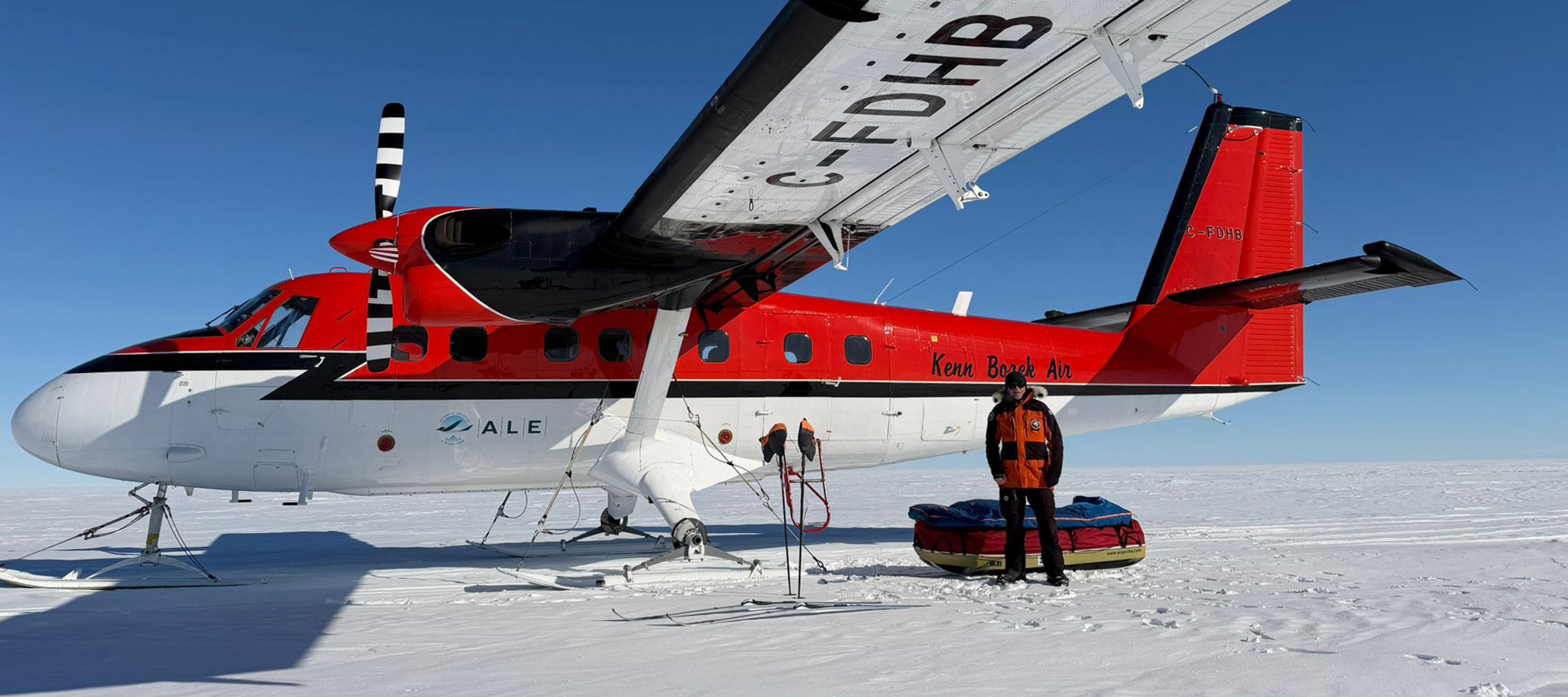
Ian Hughes completes gruelling solo ski challenge
OEG's Ian Hughes has successfully completed his solo ski expedition to the South Pole to raise £100,000 for the Always a Rifleman Programme (AARP), a veterans’ mental health charity.
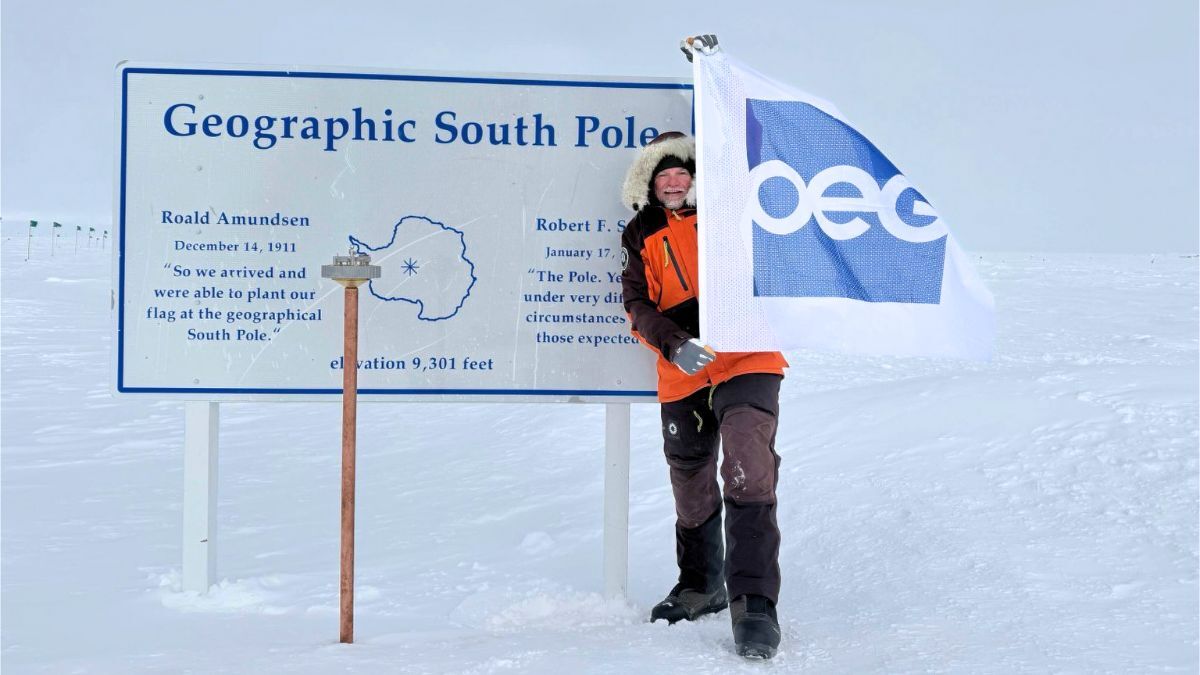
Starting from the Ronne Ice Shelf in Antarctica on November 20, the 57-year-old former Royal Green Jackets officer and Chief Operating Officer of OEG's subsea division, completed the 730 miles (911 km) ski across Antarctica on Christmas Day.
During the two-month unsupported expedition, Ian followed the Messner Route, one of the most remote and challenging routes to the South Pole, pulling a 115 kg sled for up to ten hours each day in temperatures dropping to -50°C.
Speaking from Punta Arenas, Chile, before boarding his flight to Union Glacier, Ian said:
“Some people may say I’m crazy, but really, it’s just routine, eat, sleep, ski, repeat. You’ve got to keep your head in the game, even on the toughest days. Some days will be brutal, but you just have to remind yourself that tomorrow will be better."
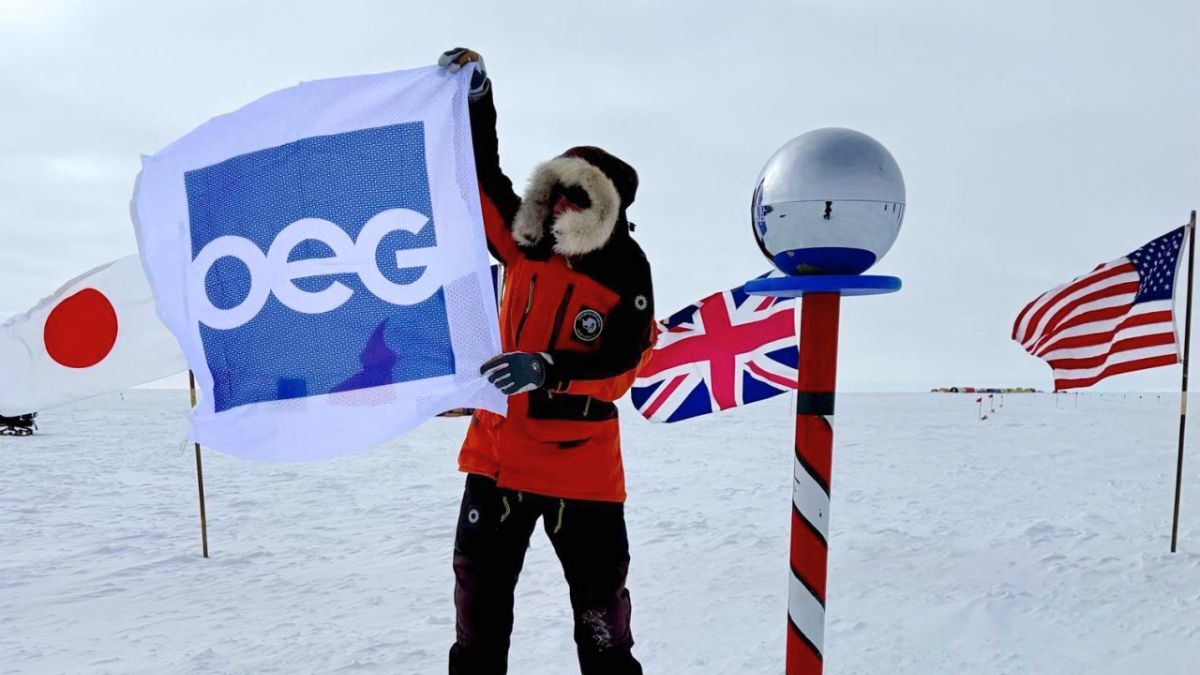
The Always a Rifleman charity helps serving and former servicemen and their families, providing connection, friendship, and vital help for those living with PTSD, depression, and hidden conflict wounds. Last year, The Queen, Colonel-in-Chief of The Rifles, became the first Patron of The Rifleman’s Association, which oversees the AARP.
Ian explains why the charity is so important:
“There has been a lot of conflict in the last 30 years, and many service people have come out with PTSD. I feel the system has failed people quite a lot, and more should be done to help veterans. There are a lot of former servicemen on the streets, homeless, and they're obviously suffering.”
To stay connected during the expedition, Hughes became one of the first explorers to use Starlink satellite internet in Antarctica, alongside backup Iridium satellite phones and Garmin trackers.
The expedition marks the penultimate leg of Hughes’s pursuit of the Explorers Grand Slam, climbing the highest peak on every continent plus skiing to both Poles, a feat achieved by fewer than 75 people worldwide.